
Woods and a pond on Georgia 400, and a trail through them that opens to everyone on the Fourth of July.
Picture it restored and open to visitors. The barn restored into an event space, for suppers and weddings and markets and the kind of gathering a county loses when it paves its open places. The grounds kept as public gardens, open to anyone who comes up the road. Trails through the woods, the pond the right size for teaching a child to fish, and a larder where the food carries the name of whoever grew it, which is what Fisher & Farmer has always been.
Help restore it and welcome visitorsMilton’s Birmingham Park has nine trails through its woods and pastures, and Milton is better for having it. Farm House is a different kind of place, and it is not trying to be that one.
It is an intentional space that we are building, and intentionality is at the center of it: a food security hub where every acre is meant for something. The barn is for the table and for gathering. The open ground is for gardens, and for learning where food comes from.
Planners have a word for a neighborhood built around a working farm: an agrihood. Serenbe, south of Atlanta, is Georgia’s best-known, its houses laid out around an organic farm. This corridor did it the other way around. The subdivisions and the shopping came first, and the open ground went under them. Farm House is the farm arriving after the fact, the amenity the neighborhoods around it never got: an agrihood, reverse-engineered.
Fisher & Farmer already does this work in the Lowcountry. The Field School brings students onto Lowland Farms, a family farm on River Road on Johns Island, outside Charleston, for days with their hands in the soil: saving heirloom seed, learning how a regenerative farm rebuilds its ground, walking the flower rows with the pollinators, and sitting down to a meal made from what they picked.
River Road knows the same pressure this corridor does, one rezoning at a time. Farm House would be the Field School’s sister in Georgia, and then some: not only a place to learn where food comes from, but a food security hub on land that was nearly paved.
Once the walking trail opens on the Fourth of July, the grounds will be open from sunup to sundown, seven days a week, to anyone who comes up the road. Until then they are closed while the overgrowth is cleared and the first pathways are cut.
Plan your visit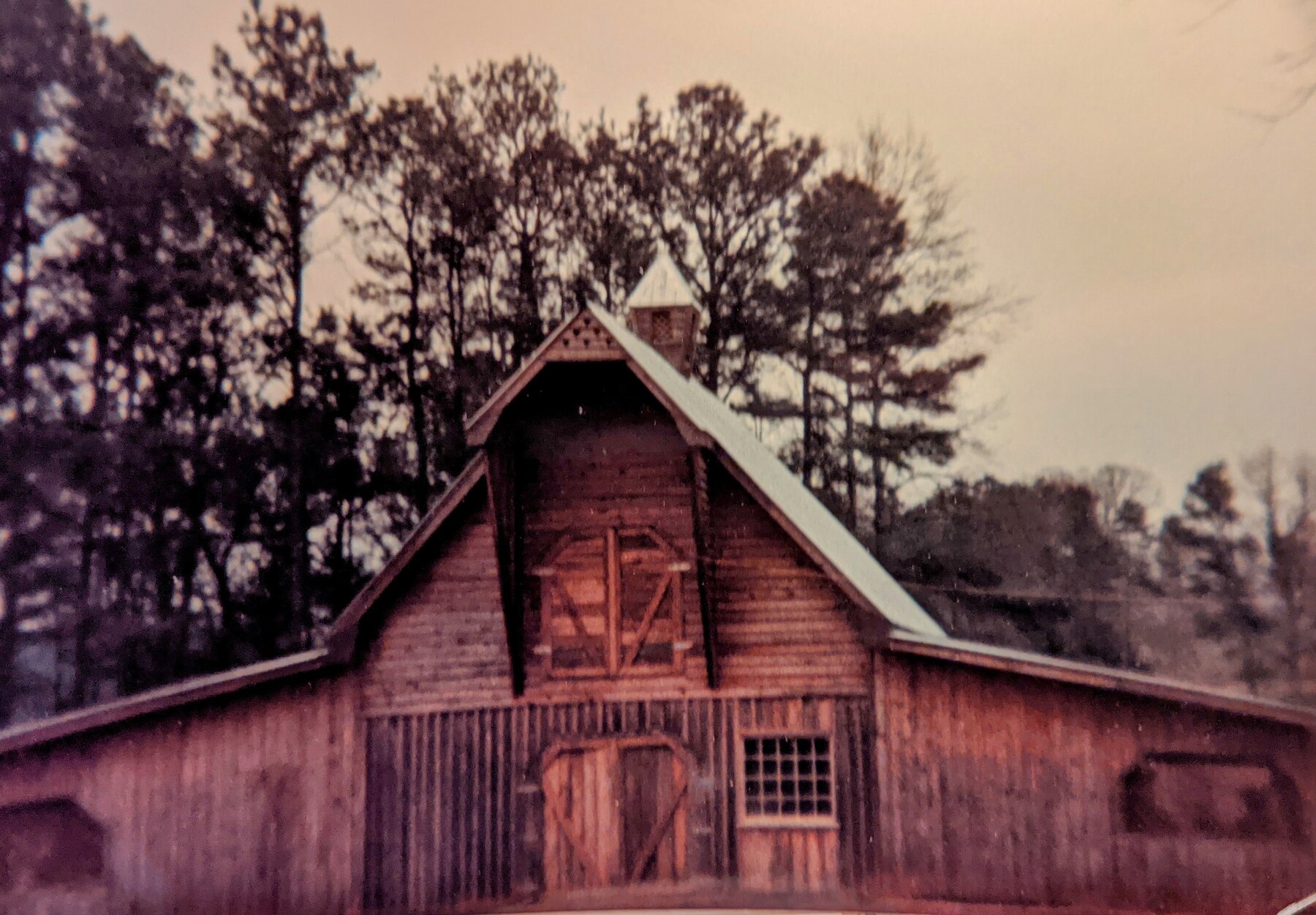
The woods turn and let go of their leaves. The cool months are the right time for the clearing of Phase One.
Fall is when the deer are most on the move. Look for them at the edge of the woods at dawn and at dusk.
Cardinals stay in Georgia the whole year. Once the leaves come down, the red is easier to find.
Phase One is under way: clearing the overgrowth and cutting the first pathways, now through June.
Farm House is a project of the Fisher & Farmer Foundation: one of the last open tracts on the 400 corridor, privately held, and kept as a public greenspace, open to all. A place to pause, gather, and come to know the ground our food grows in.