Suppers in the Barn
A long table under the cupola, the food carrying the name of whoever grew it.
One of the last open tracts on Georgia 400, kept from the warehouse and open to all.
Help bring it backThirteen acres of open Georgia ground on the 400 corridor, held by one family since the 1830s and kept from the warehouse that was coming for it. Woods and a pond, an old barn, pathways being cut back through ground gone quiet: open land, and meant to be open to all.
The grounds are not open yet. Here is some of what they will hold.
A long table under the cupola, the food carrying the name of whoever grew it.
Days on the land for families and school groups, close to the ground the food grows in.
Open mornings on the grounds, and the trail through the woods to walk any day.
Timber and board, a cupola and a weathervane, raised in the 1980s and still standing. Restored, it becomes the heart of the place.
A passive walking trail cut through the woods, the first piece anyone can come and use. It opens the Fourth of July.
The grounds kept as a public garden, open to anyone who comes up the road, the way American Gardens in Charleston is open to all.
Still water at the back of the property, the right size for teaching a child to fish.
Farm House is a project of the Fisher & Farmer Foundation: one of the last open tracts on the 400 corridor, taken on with the family that has farmed it for generations, so it stays tended and stays open. A place to pause, gather, and come to know the ground our food grows in.
The vision for Farm House first took shape, in its most nascent form, in 2017. But the story it belongs to began a long time before that, and to tell it properly you have to go back well past the barn, to a name on an old map.
Farm House is not a name we invented. From 1834 to 1858 there was a settlement by that name a few miles south, where a millwright named Hiram Trammell began a stone dam across a creek and Isham Teasley finished it and raised a gristmill, a cotton gin, a store and a post office. The post office put the two words on the first maps of this country. When the new county needed a seat, the name moved to the new town and became Alpharetta.
The land itself has stayed in one family since close to the beginning. A Baptist preacher named Richard Phillips came into the county around 1835 and his people never left. The line runs down through the names on the old stones and in the deed books: Richard Phillips to his son Lewis Berry Phillips; to his daughter Evelyn Clementine, who married John Lafayette Samples; to their son George Presley Samples, who married Fannie Odessa Day; to their daughter Margaret, who married Mack Martin; to Margaret’s daughter Sandra, who holds the land today. Farming people the whole way down, on the same Georgia ground.
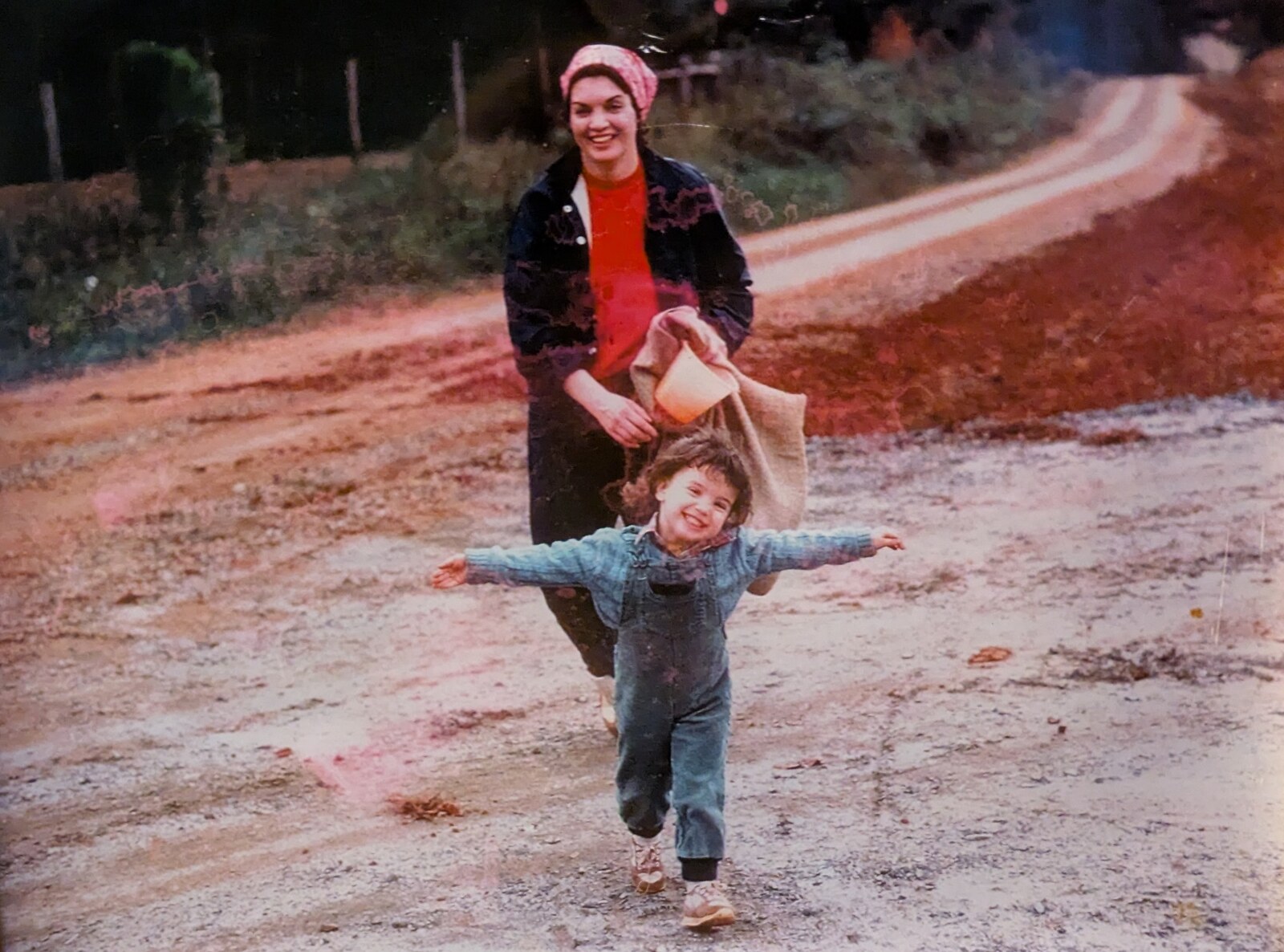
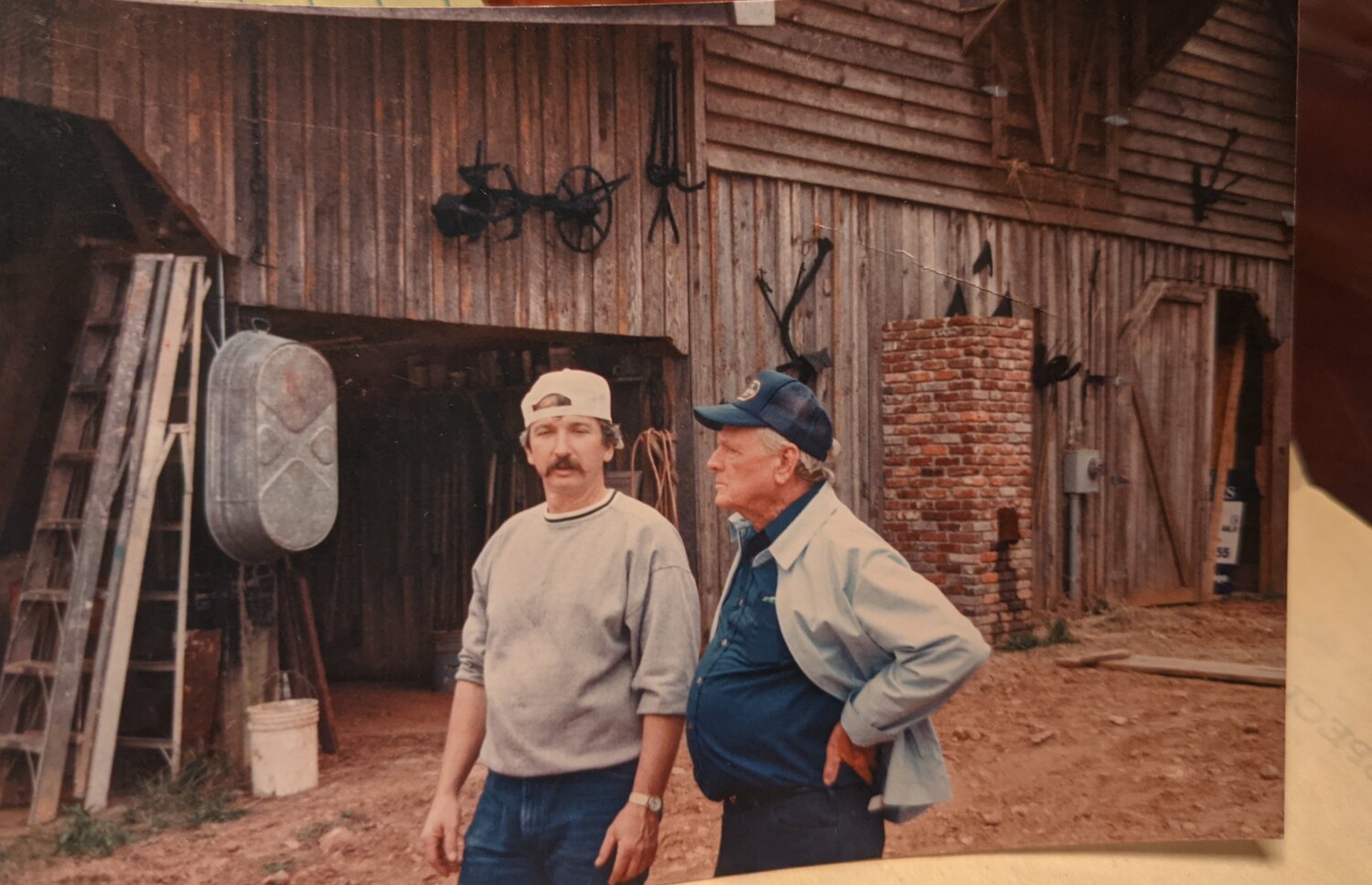
Margaret and Mack Martin bought this tract meaning to live on it. Mack died young and the plans died with him, and the women of the family held the land anyway. It was the man Sandra married who finally built on it. In the 1980s he raised the barn, and raised it well: timber and board, a cupola, a weathervane, a tack room with a porch. He started a house beside it and never finished it; it stood framed and open to the weather for forty years, until teenagers from one of the new subdivisions set it on fire in 2023. The barn is still standing.
Alpharetta is building a heritage park at the old settlement site now, and we are glad of it. It is a historic slice of the city’s past, a place to stand and look back at where all of this began. Farm House looks the other way. We are not marking something that is finished; we are making something in the present, on ground that is still open.
On this stretch of Georgia 400 near Alpharetta sits one of the last pieces of ground nobody has built on: about thirteen acres of woods and field gone over to brush, a pond, an old barn, deer in the evening. It is under contract. The plan is a warehouse.
The neighbors did not take it quietly. More than eight hundred of them signed a petition against the rezoning, people who live around the property and have watched this county fill in road by road and decided this was the piece worth standing on. That petition is theirs, not ours. We represent the family that owns the land, and we read those eight hundred names as the plainest proof that a warehouse is the wrong future for this corner.
Because a warehouse is close to forever. Once the slab is poured and the trucks start, no amount of money buys the field back. You cannot un-pave a place.
The Fisher & Farmer Foundation is taking the land on, so it does not become a warehouse. That is the first thing, and the urgent thing. Everything good comes after it.
Honesty first, though. This is not a park today. It is an overgrown property that has sat quiet and untended for years, the woods closing in, the barn weathering, the burned frame of a house still on it.
So the first phase is beautification. Clear what has grown over the place, cut the first pathways, open the views back up, bring the grounds and the barn back to something lovely and safe to walk. A piece of ground held this long and let go this far has to be made beautiful before it can be made public.
Made beautiful first, and then made public.
It stays in private hands on purpose. Down in Charleston, Ben Navarro took a parking lot on King Street and spent about eleven million dollars turning it into a garden, American Gardens, open to anyone who walks up, no gate and no ticket, kept his to tend rather than handed to the city. The reason is plain. A place somebody owns and keeps stays good; a place everybody owns and nobody tends goes back to brush, or to pavement. Milton, right next door, learned the same thing and started buying its open land outright.
There is an old Woody Guthrie verse about a sign that read Private Property, and the man who looked at the blank back of it and decided that side, at least, was made for you and me. That is the whole idea here: held privately, so it stays tended and beautiful, and kept open on the other side of the sign for everybody else.
Picture it brought back. The barn restored into an event space, for suppers and weddings and markets and the kind of gathering a county loses when it paves its open places. The grounds kept as a public garden, open to anyone who comes up the road, the way American Gardens in Charleston is open to anyone. Trails through the woods, the pond the right size for teaching a child to fish, and a larder where the food carries the name of whoever grew it, which is what Fisher & Farmer has always been.
Welcome, this is a farmhouse. In the farmhouse, things will be alright.Phish, “Farmhouse”
And here is the ground it would hold, in the middle of everything already built. Drag the map to look around, and zoom in: the subdivisions, the shopping, the arena and the warehouses on every side, and the one green parcel still open.
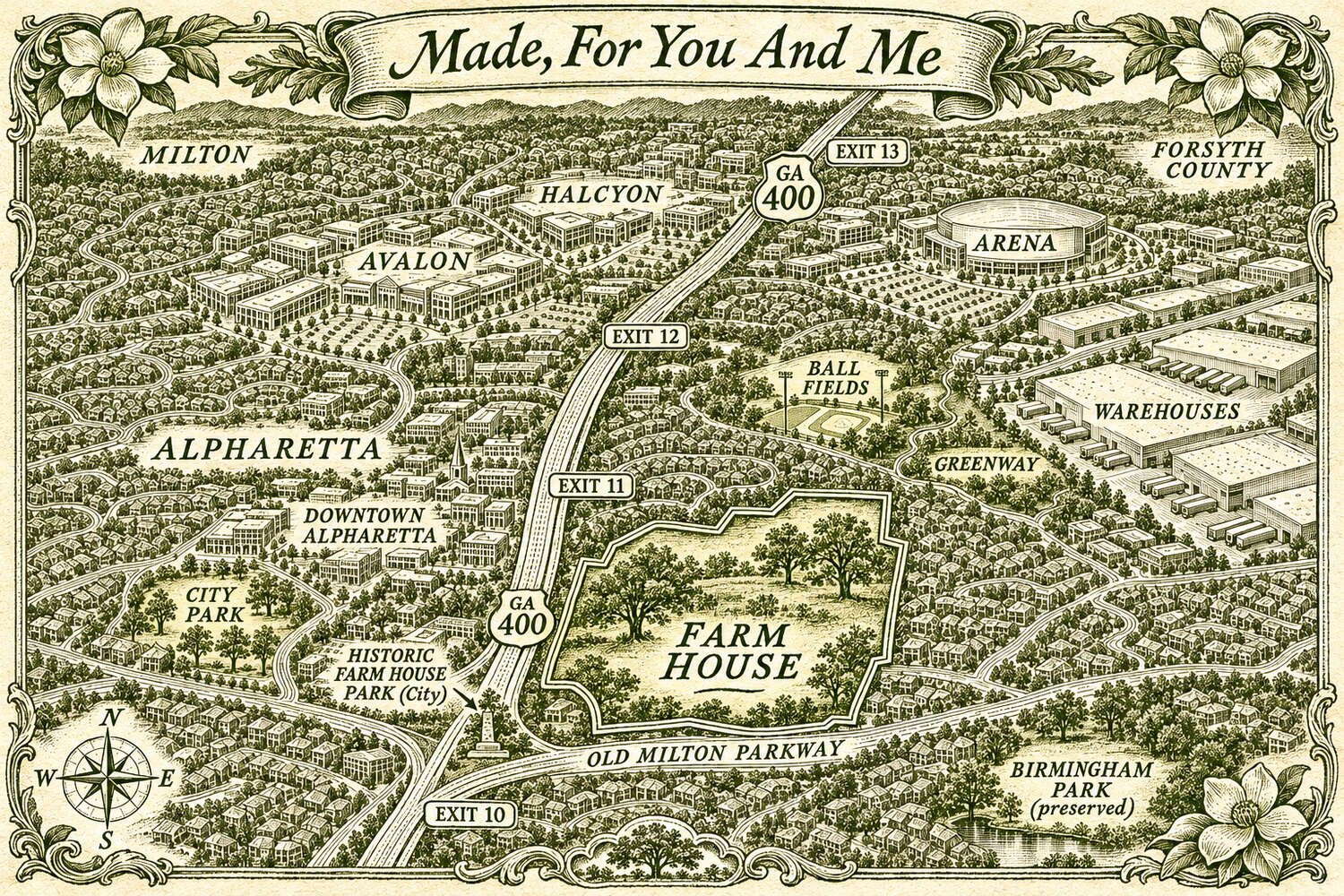
Drag to explore. Scroll or pinch to zoom.
Phase One: beautification
Clear the overgrowth, cut the first pathways, open the views, and bring the grounds and the barn back to something worth walking through.
Phase One goal: $______ (to be set)
The walking trail opens
A passive walking trail through the property opens to the public, the first piece anyone can come up the road and use.
The programming
The barn restored into an event space, the grounds kept as a public garden on the American Gardens model, and the larder, built out as the project grows.
The first phase is the beautification of the property: clearing what has grown over it, cutting the first pathways, opening the views, bringing the grounds and the barn back to something worth walking through. Everything after that builds the programming, the event space, the public garden, the larder, the life the place will hold. You can stand behind either one.
Farm House is a project of the Fisher & Farmer Foundation, a US 501(c)(3) (status pending). Gifts are received and held by the Foundation and put toward the beautification of the land and the public garden it will become.